
On this page
When do you need to measure PAH?
- Permit conditions. The environmental permit or the monitoring programme states which PAH are to be determined, the emission limit value and how often.
- Waste incineration: the BAT conclusions require benzo(a)pyrene to be measured once a year. There is no BAT-associated emission level (BAT-AEL).
- Anode plants and the production of carbon and graphite: benzo(a)pyrene is measured once a year according to ISO 11338 and compared with the BAT-AELs in the BAT conclusions.
- Wood impregnation with creosote: the sum of 16 PAH in the waste gas is measured at least once a year.
- Combustion optimisation: together with CO and TOC, PAH shows how far the excess air can be reduced for lower NOx.
How the sampling train is built
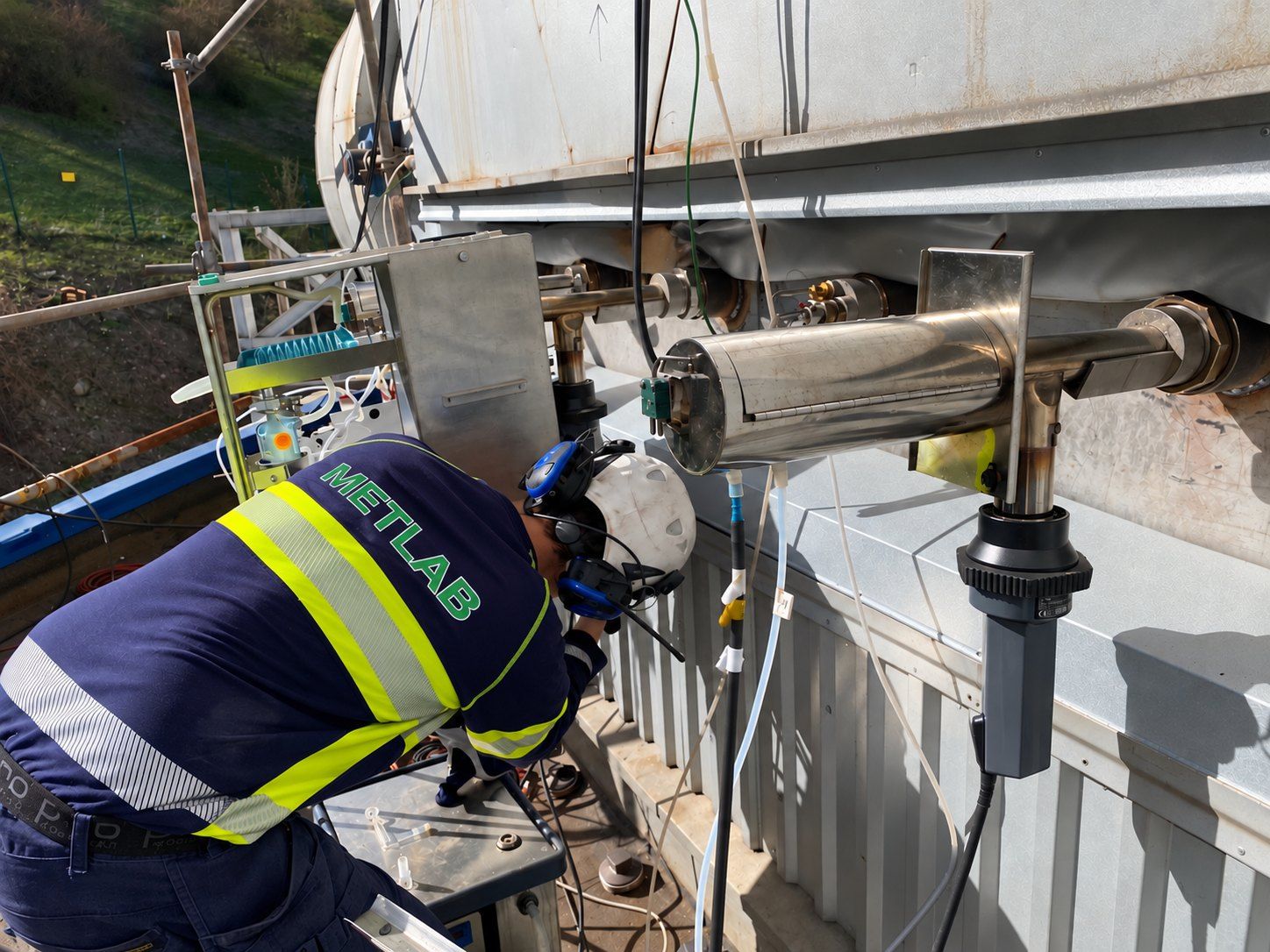
We sample with the filter/condenser method of ISO 11338-1, the same principle and the same equipment as for dioxin sampling. The sample gas is drawn isokinetically through a nozzle and a heated glass probe to a plane filter in a heated filter box, where the particle-bound PAH are collected. The gas is then cooled in a glass cooler (the condenser) and passes a cartridge with the adsorbent XAD-2, which captures the gaseous ones. The condensate is separated, the gas is dried with silica gel, and a pump and a dry gas meter give the sample volume.
- 1. Glass nozzle, facing the gas stream
- 2. Glass probe, heated
- 3. Plane filter in a heated filter box
- 4. Glass cooler with circulating coolant
- 5. Cartridge with adsorbent (XAD-2)
- 6. Condensate bottle
- 7. Drying tower with silica gel
- 8. Control valve
- 9. Gas-tight pump
- 10. Dry gas meter
- 11. Temperature sensor at the gas meter
- 12. Temperature sensor, flue gas temperature (type K thermocouple)
- 13. Pressure gauge, static pressure in the duct
- 14. Pressure gauge, dynamic pressure (micromanometer)
- 15. Pitot tube (L- or S-type) for gas velocity
- 16. Barometer
The standard also describes two other methods, the dilution method and the cooled probe/adsorber method, and regards all three as equivalent. More about the equipment is on the page about dioxin measurement.
How is a PAH measurement done?
Planning
The measurement plane is chosen as for dust measurement. We check with you which PAH and which sum the permit condition refers to, so that the laboratory determines the right compounds.
Cleaned equipment
The probe, filter holder and glass parts are rinsed with solvent, and every batch of filters is checked for its background level of PAH. An internal standard can be added before the sample and shows the recovery.
Preliminary measurement and leak test
Gas velocity, temperature and moisture are measured, and the nozzle is chosen for isokinetic sampling. With the nozzle plugged, the leak rate must be below 5 % of the sample gas flow.
Sampling
The probe is moved between the measurement points while the flow is controlled isokinetically. The filter is kept above the dew point of the flue gas, and the gas after the cooler below 20 °C.
Rinsing and storage
The probe is rinsed with acetone, hexane and toluene, and the rinse is part of the sample. The samples are stored dark and cold until the laboratory extracts them.
Analysis and report
An accredited laboratory determines each PAH by gas chromatography with mass spectrometry or by liquid chromatography (ISO 11338-2). We convert the results to µg/Nm3 (dry gas at 0 °C and 101.3 kPa), and for combustion also to the reference oxygen content.
The requirements in ISO 11338-1
These requirements decide whether a PAH sampling with the filter/condenser method is valid.
| Requirement | Value |
|---|---|
| Filter temperature | Above the dew point of the flue gas, but not higher than the flue gas temperature |
| Sample gas after the cooler | Below 20 °C |
| Materials | Probe and nozzle of glass, quartz, titanium or stainless steel; no grease in the joints |
| Leak rate | Below 5 % of the sample gas flow, before every sample |
| Adsorbent | Collection efficiency validated for the PAH measured; gas velocity through the XAD-2 below 34 cm/s |
| Storage | Protected from light, in the dark at −7 °C; extraction within one week, preferably within 24 hours |
| Blank sample | Not required. An unexposed sampling train can be analysed, but the value is not subtracted from the result |
PAH-16, benzo(a)pyrene and sum values – what is reported?
PAH are a large group of compounds with two or more fused aromatic rings of carbon and hydrogen. The laboratory usually determines the 16 that the US Environmental Protection Agency (EPA) has singled out: naphthalene, acenaphthylene, acenaphthene, fluorene, phenanthrene, anthracene, fluoranthene, pyrene, benzo(a)anthracene, chrysene, benzo(b)fluoranthene, benzo(k)fluoranthene, benzo(a)pyrene, indeno(1,2,3-cd)pyrene, dibenzo(a,h)anthracene and benzo(g,h,i)perylene. The sum is called PAH-16.
The regulations mean different things by PAH. The BAT conclusions for creosote impregnation set the BAT-AEL for the sum of exactly those 16. The conclusions for waste incineration and anode production instead name a single compound, benzo(a)pyrene, as the indicator for the whole group, and a permit may refer to yet another sum. So read the condition before you order: a sum that includes the volatile naphthalene cannot be compared with a value for benzo(a)pyrene.
Light PAH with two or three rings are largely gaseous and are caught in the adsorbent; the heavier ones sit on the particles and are caught on the filter. That is why both are analysed, and the result is the sum.
Which emission limit values apply to PAH?
There is no general Swedish emission limit value for PAH in flue gas: the ordinances on medium and large combustion plants and on waste incineration contain no limit values for PAH. Limit values are set in the permit or in the industry's BAT conclusions, whose upper value applies as the limit value four years after publication. The values refer to the average over the sampling period.
| Activity | BAT-associated emission level (BAT-AEL) | Source |
|---|---|---|
| Anode production for aluminium: paste plant and anode baking | Benzo(a)pyrene 0.001–0.01 mg/Nm3 (1–10 µg/Nm3) | BAT 59–61, (EU) 2016/1032 |
| Carbon and graphite | Benzo(a)pyrene 0.001–0.01 mg/Nm3 (storage and grinding of coke and pitch ≤ 0.01); baking and rebaking 0.005–0.015, cathodes up to 0.05 | BAT 178–181, (EU) 2016/1032 |
| Wood impregnation with creosote | Sum of 16 PAH: < 1 mg/Nm3 | BAT 51, (EU) 2020/2009 |
| Waste incineration and iron foundries | No BAT-AEL – benzo(a)pyrene is measured once a year, in foundries when melting cast iron if PAH is relevant | BAT 4, (EU) 2019/2010 and BAT 12, (EU) 2024/2974 |
What does a PAH measurement cost?
The price depends mainly on the number of samples and the sampling time. Every sample needs cleaned glass equipment, a new filter and new adsorbent, and the laboratory analysis is a large part of the cost. If PAH is sampled together with dioxins, or dust, CO and TOC are measured at the same visit, the travel and set-up are shared. Request a quote – we reply within two working days. Approximate prices for the most common measurements are in the price guide.
How often must PAH be measured?
As often as the permit says. The ordinances on combustion plants have no intervals for PAH. Where BAT conclusions apply, the interval is once a year: for benzo(a)pyrene at waste incineration, anode production, the production of carbon and graphite and, where relevant, in iron foundries, and for PAH-16 at creosote impregnation.
Measure PAH yourself
-
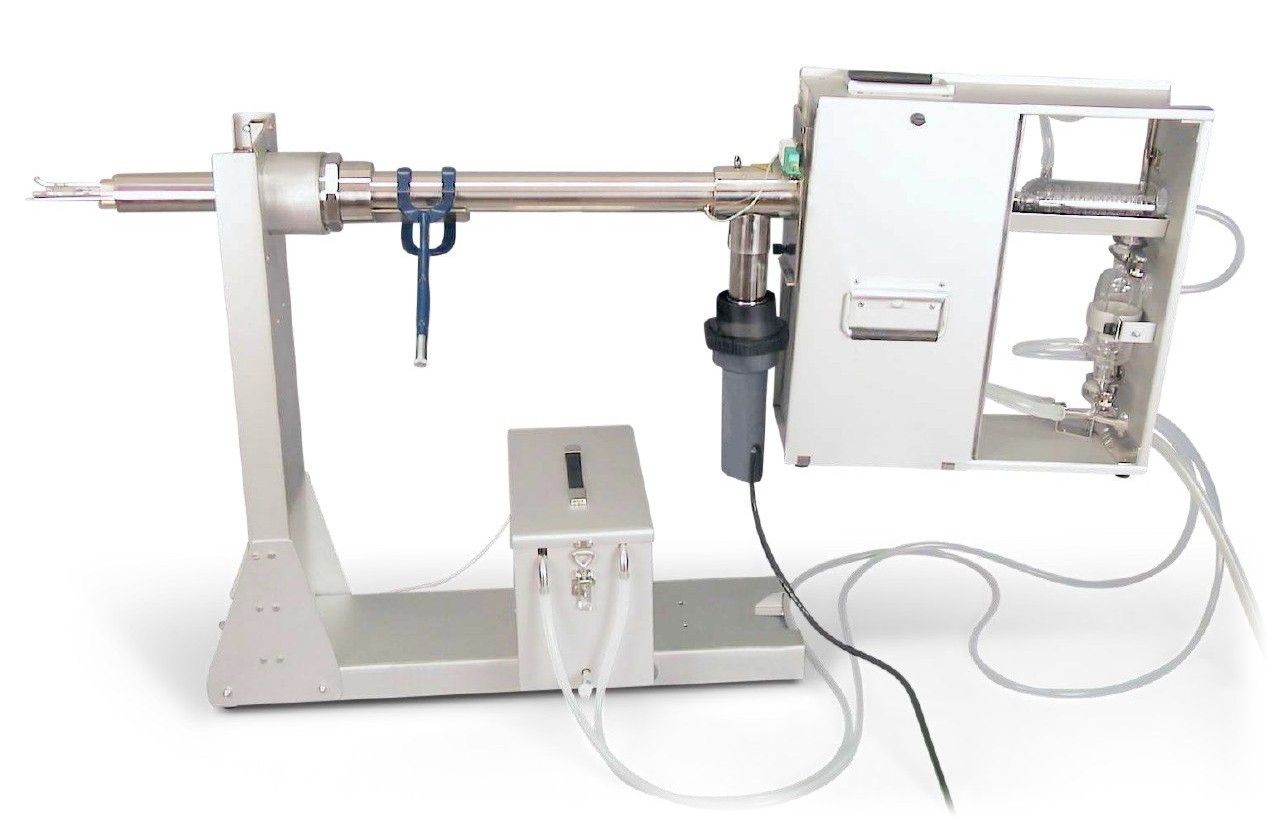 EVA Light
 dioxin sampler
Glass probe, heated filter box, glass cooler and XAD-2 cartridge for dioxins, PAH and other organic micropollutants, up to 20 l/min.
-
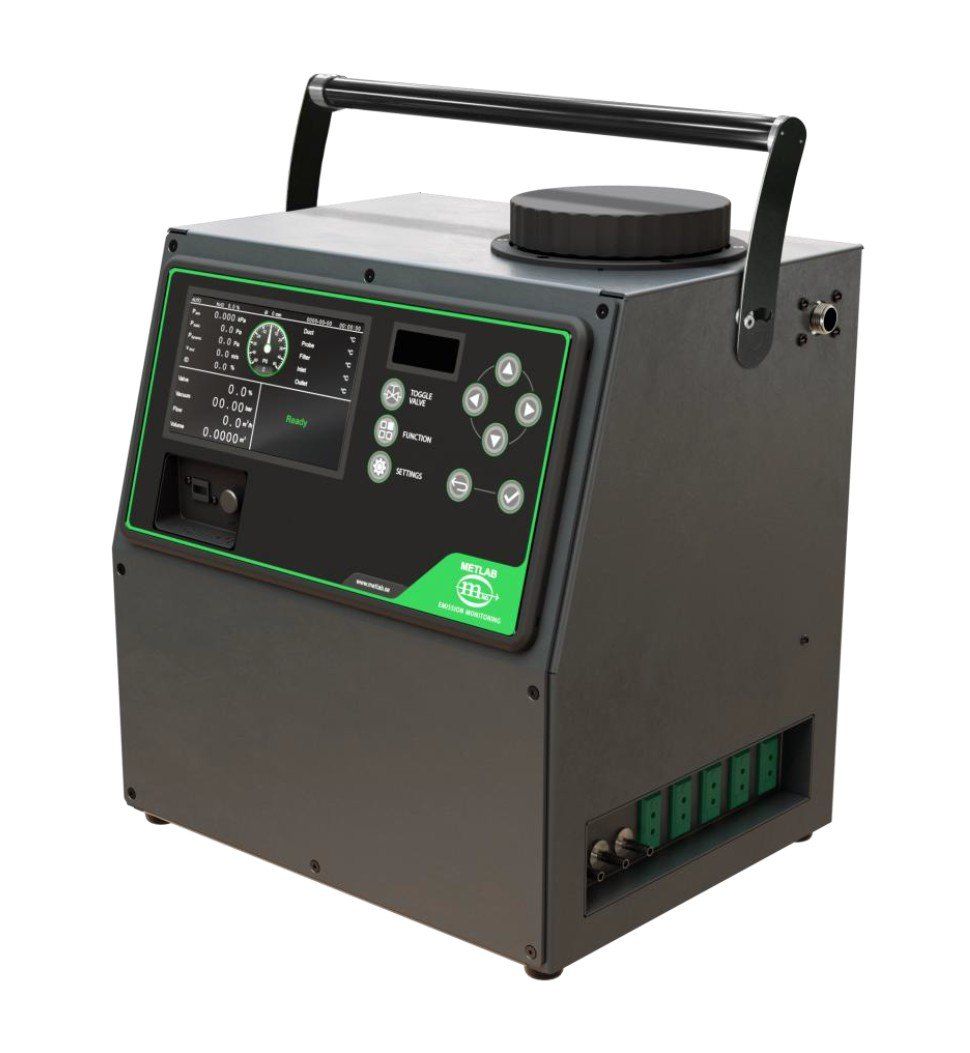 DX11-101
ADS-1-DX control unit
Automatic isokinetic control, logging of all parameters and a 7-inch display. Also handles dust sampling.
Frequently asked questions about PAH measurement
Is the PAH measurement accredited?
Yes, the sampling. METLAB's Swedac accreditation covers sampling of PAH according to ISO 11338-1 with the filter/condenser method. The analysis is done by an accredited laboratory, and the measurement uncertainty is stated in the report.
How long does a PAH measurement take?
The standard sets no fixed sampling time. It is chosen so that the sample volume is enough for the analysis. A BAT-AEL refers to the average over the sampling period: three consecutive samples of at least 30 minutes each. If PAH is sampled together with dioxins, the sample runs for 6–8 hours.
Can PAH be measured at the same time as dioxins?
Yes. PAH can be sampled in the same sampling train as dioxins, with filter, cooler and XAD-2. Say so when you order, and the sampling and the analysis are prepared for both.
What does the CO concentration say about PAH?
PAH form when combustion is incomplete and follow the peaks in CO. The relationship holds for the individual boiler: a study of solid-fuel boilers by the Swedish energy research organisation Värmeforsk found no general relationship. So CO is used as the day-to-day indicator, while PAH is measured at the periodic measurement.
What is required of the measurement site?
The same as for dust measurement: two to four sampling ports on a straight run of duct, normally sockets with a 3-inch pipe thread, a safe working platform with room for the glass equipment, and electricity for the heating, the cooler and the pump.