
On this page
Why a suction pyrometer?
In a furnace the flame and the hot walls radiate towards the sensor, and an ordinary thermocouple then does not show the temperature of the gas. The suction pyrometer counters the radiative heat transfer by increasing the convective heat transfer from the flue gas: the sensor is shielded, and the gas is drawn past it at up to 100 m/s.
Typical uses are temperature profiles in furnaces, boilers, rotary kilns and other combustion chambers, where the gas temperature can exceed 1,000 °C.
How it is built
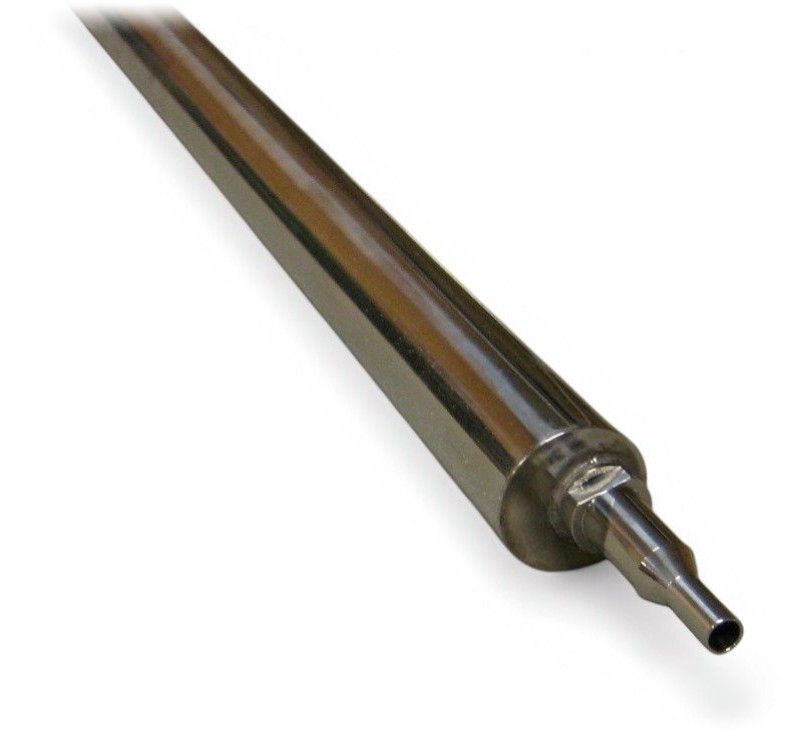
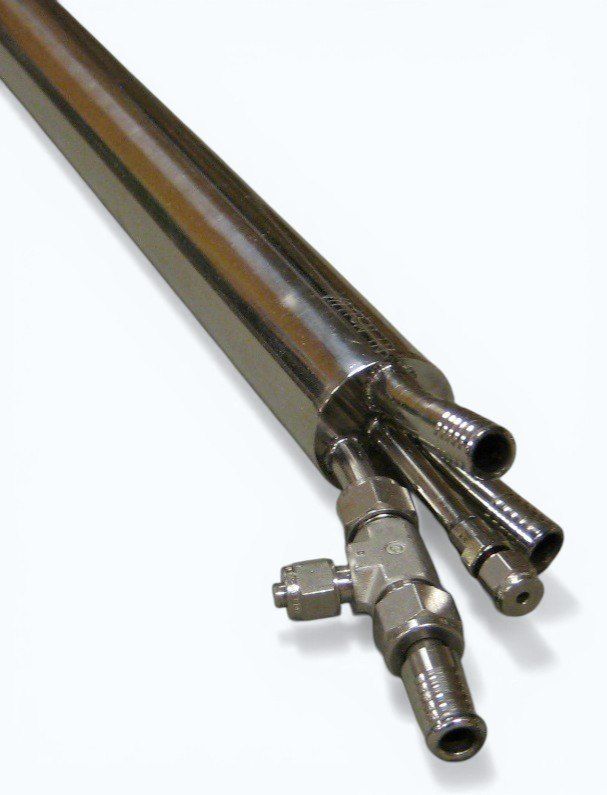
- Radiation shield of heat-resistant metal or ceramic, easy to remove for cleaning, inspection and replacement.
- Water-cooled body of stainless steel. The cooling water flow must be high enough that the water does not boil in the pyrometer.
- Length for traversing: the pyrometer must be long enough for you to traverse the measurement plane, for example in the furnace. Standard lengths 2 to 4.5 m in 0.5 m steps, or extendable, for example 1.5 + 1.5 + 1.5 = 4.5 m.
- Suction unit with a compressed-air ejector and an integrated venturi flange that indicates the sample gas flow, with a condensate separator and filter upstream. The capacity is enough for up to 100 m/s at the sensor.
The parts
-
-
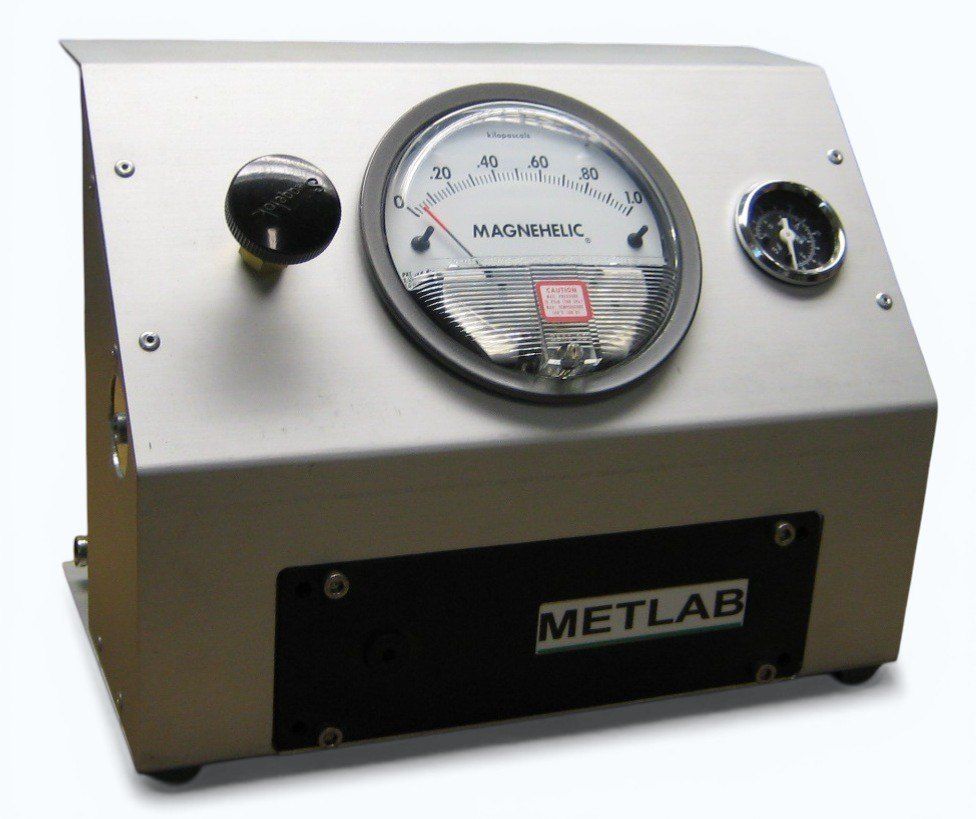 Suction unit
 with ejector
Compressed-air ejector with a venturi flange that indicates the sample gas flow, and a condensate separator and filter upstream.
Frequently asked questions about suction pyrometers
How hot a gas can the suction pyrometer handle?
It is made for gas temperatures well above 1,000 °C. The radiation shield is available in heat-resistant metal or ceramic.
Which length do I need?
Long enough to reach across the whole measurement plane from the sampling port. The standard lengths are 2–4.5 m, and the extendable version is assembled from sections, for example three of 1.5 m.
What is needed on site?
Compressed air for the ejector and cooling water with enough flow that the water does not boil in the pyrometer.